I've spent 15+ years on one deceptively simple question.
I'm Dr. Christian Onyemali, founder of Eleven 11 Consulting. Good intentions aren't impact, and a great story isn't necessarily evidence that something is working. My job is to help people tell the difference.
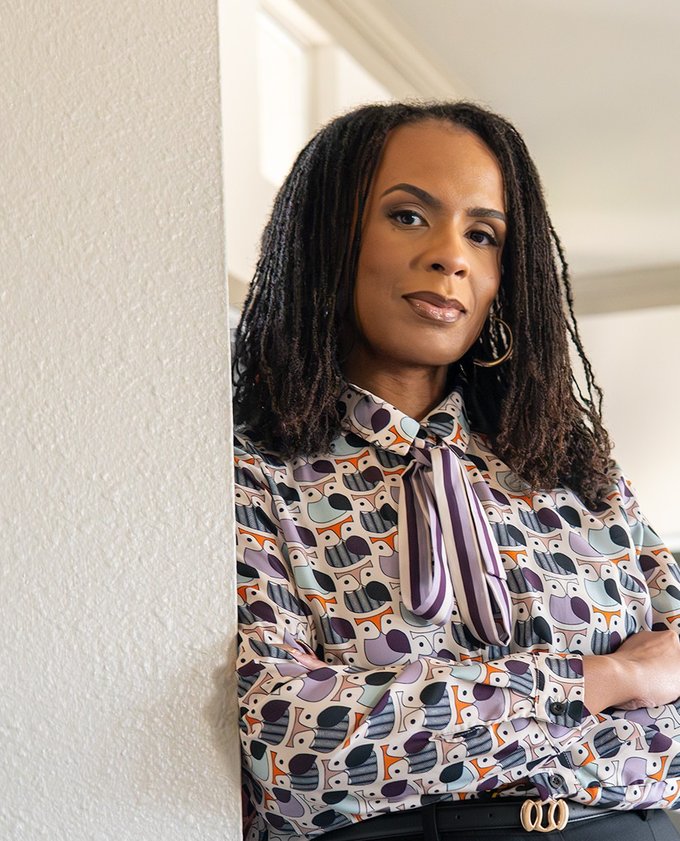
I care about the gap between what we hope our time, talent, and treasure will accomplish, and what we actually know.
I grew up in Tulsa, Oklahoma, the kind of place where you can see plainly which kids get opportunity and which ones don't. I was a first-generation college student. I got there because of programs that worked: nonprofits that showed up for kids like me, teachers and counselors who went past their job descriptions, and eventually Spelman College, an institution that took the raw material of a Tulsa kid seriously and sent her out different.
So, I'm not neutral about this. I'm what effective philanthropy looks like from the inside. Somebody's gift, somebody's program, somebody's decision to fund the thing that actually worked, is the reason my life looks the way it does. That's exactly why I can't be sentimental about it. When a program works, it changes the shape of a life. When it only appears to work, someone like me doesn't get that.
That's what sent me from teaching in a 1st grade classroom to a Ph.D. in Education Policy, and then into evaluation. For over 15 years my job has been to walk into an organization and answer one question: is this actually working? I did it for programs funded by state and federal dollars, the Gates Foundation, the National Science Foundation, and other major philanthropies, and from the inside as a Director of Evaluation and Learning.
What I kept finding is that the gap is almost never about bad intentions. Everyone in this work means well. But the annual report is glossy, the story at the gala is genuinely moving, and underneath it all, often nobody can actually tell you whether the thing worked. Not because they're hiding something. Because no one ever built the means to know.
Then I ran a nonprofit myself, as founder and Executive Director of a youth-serving organization, and felt the other side of it: the pressure to prove what you're doing works, while still building the ship. Because that's what funding requires.
Almost sixteen years in, I'm still turning the same question over. It's the most useful question I know, and the one people are most afraid to ask out loud.
Today, I help people make better decisions about impact.
Sometimes that means:
The work changes depending on the situation. The question doesn't: what do we actually know about the impact we're trying to create?
How I work
Four principles that hold true no matter who's asking.
Evidence over optics
Impact claims need more than a compelling story. I assess whether the evidence behind them holds up.
Independent by design
I have no relationship with the organizations I evaluate. That independence is what makes the answer worth having.
Rigorous but practical
Fifteen years of formal evaluation methodology, translated into clear findings you can actually act on.
Honest about uncertainty
Sometimes the right answer is "we don't know yet." Knowing that is more useful than false confidence.
When I tell you the evidence is strong, you can act on it. When I flag concerns, you have what you need to ask harder questions, or walk away.
What partners say about the work
A decade-plus of evaluation partnerships across education, research, and nonprofit organizations.
Christian entered a role in crisis and within six months created real buy-in for evaluation and built a two-year strategy with strong internal investment.
She took us through building a logic model step by step, compelling, accessible, and incredibly useful. We still use the metrics she created to measure our impact.
Christian guided Muse Knoxville through developing a logic model to support data collection for a new program. A fantastic facilitator and an incredible teacher.
Her ability to communicate outcomes and provide thorough support materials for 30+ coaches was so impressive I've modeled my own work on her approach.